5 Resume Mistakes That Are Costing You Interviews
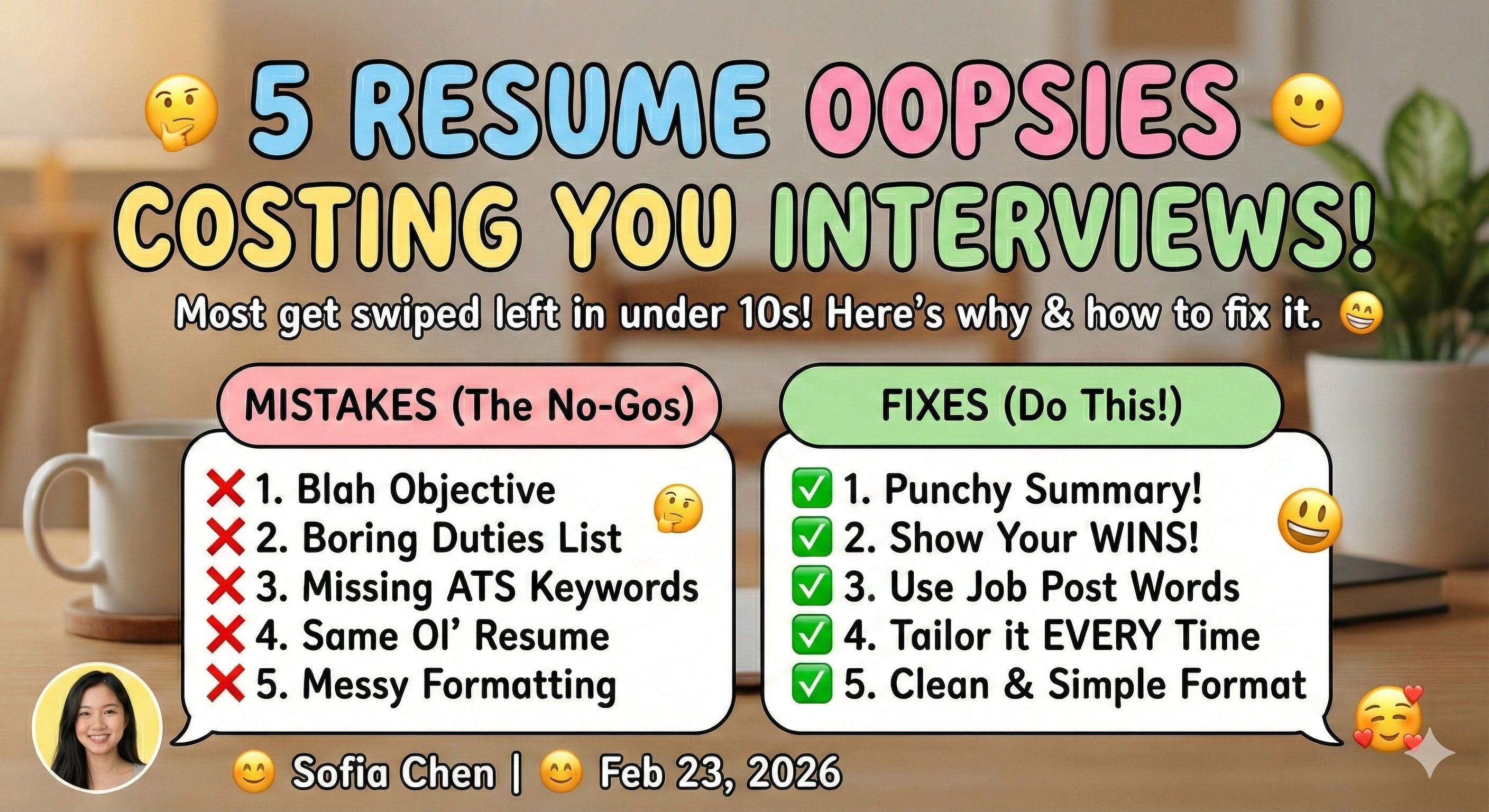
Most resumes get rejected in under 10 seconds. Here are the five most common mistakes job seekers make — and exactly how to fix them.
Your resume lands on a recruiter's desk. They spend 7 seconds scanning it before deciding to read further or move on. Most resumes never make it past that first glance — not because the candidate isn't qualified, but because of avoidable mistakes that make the resume hard to skim.
Here are the five most common resume mistakes we see — and how to fix each one.
1. Using a generic objective statement
"Seeking a challenging position where I can leverage my skills..." — recruiters have read this a thousand times and it tells them nothing. It takes up prime real estate at the top of your resume without adding any value.
Fix it: Replace it with a 2-line professional summary that names your role, years of experience, and one or two measurable achievements. Make it specific to the job you're applying for.
2. Listing duties instead of achievements
"Responsible for managing social media accounts" describes what you were supposed to do. Recruiters want to know what you actually accomplished.
Fix it: Rewrite every bullet using the formula: Action verb + what you did + measurable result. Example: "Grew Instagram following by 40% in 3 months by launching a weekly video series, driving a 25% increase in site traffic."
3. Ignoring ATS keywords
Most companies use an Applicant Tracking System (ATS) to filter resumes before a human ever sees them. If your resume doesn't include the right keywords from the job description, it gets filtered out automatically — even if you're perfectly qualified.
Fix it: Read the job description carefully and mirror its exact language. If it says "cross-functional collaboration", use that phrase — not "worked with other teams". Tools like Leepo's ATS scorer can show you exactly which keywords you're missing.
4. One resume for every job
Sending the same resume to 50 different jobs might feel efficient, but it dramatically lowers your response rate. Each job description is different — a tailored resume consistently outperforms a generic one.
Fix it: Keep a master resume with everything you've ever done. For each application, create a tailored version that emphasises the experiences most relevant to that specific role. Aim to match at least 70% of the key skills listed.
5. Poor formatting that breaks ATS parsing
Tables, text boxes, headers/footers, and fancy graphics look great in Word — but ATS systems often can't read them, leaving your resume appearing blank or garbled.
Fix it: Stick to a clean, single-column layout with standard section headings like Experience, Education, and Skills. Use a PDF exported from a clean template rather than a heavily designed Word doc.
The bottom line
A strong resume isn't about being creative — it's about being clear, specific, and relevant to the job you're applying for. Fix these five mistakes and you'll already be ahead of the majority of applicants.
If you want to know exactly how your resume scores against a specific job description, Leepo's ATS analyser gives you a score, flags missing keywords, and suggests improvements — in under a minute.